
 #1 EHR for PT/OT Rehab

SPRY Agentic Scribe
SPRY Agentic Scribe is built natively for outpatient rehab. It brings patient history into the visit, drafts into actual SPRY fields, learns each clinician’s preferences, and helps therapists finish notes without losing patient face time.
Request a Demo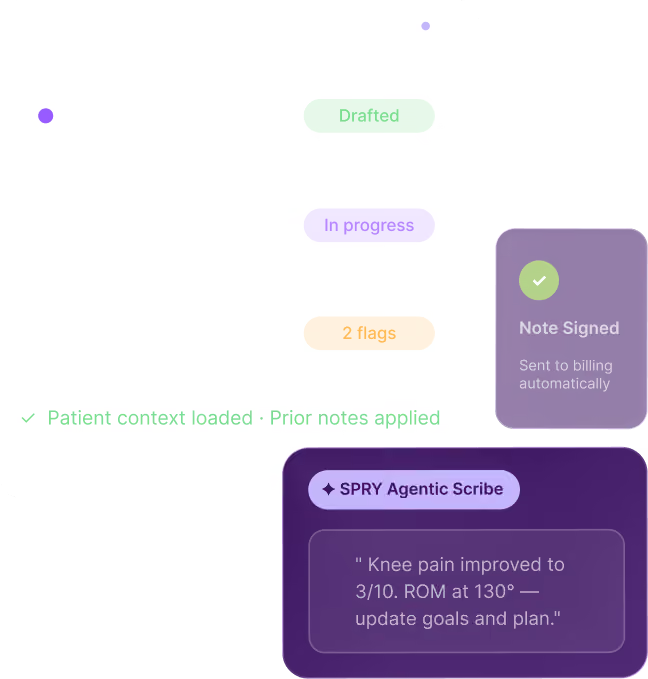
Trusted by 1000+ Rehab Therapy Clinics






Most AI Scribes Still Leave Therapists With the Cleanup

They start without the patient’s history
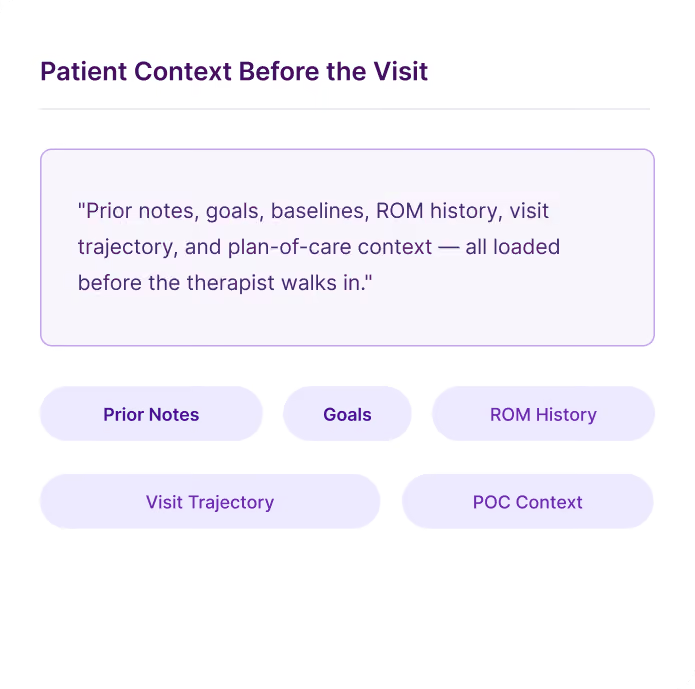
A rehab note is not just today’s conversation. It needs prior visits, goals, baselines, progress, plan-of-care context, and the clinical arc across the full episode.
.svg)
They create a draft, not a finished workflow
Generic summaries still have to be moved into SOAP fields, goals, grids, measurements, billing sections, and payer-ready documentation.

They miss the details that matter later
A wrong body part, missing measurement, weak medical necessity statement, or inconsistent goal can create rework for the therapist, the biller, and the clinic.
More Than Dictation, Built With Patient Context
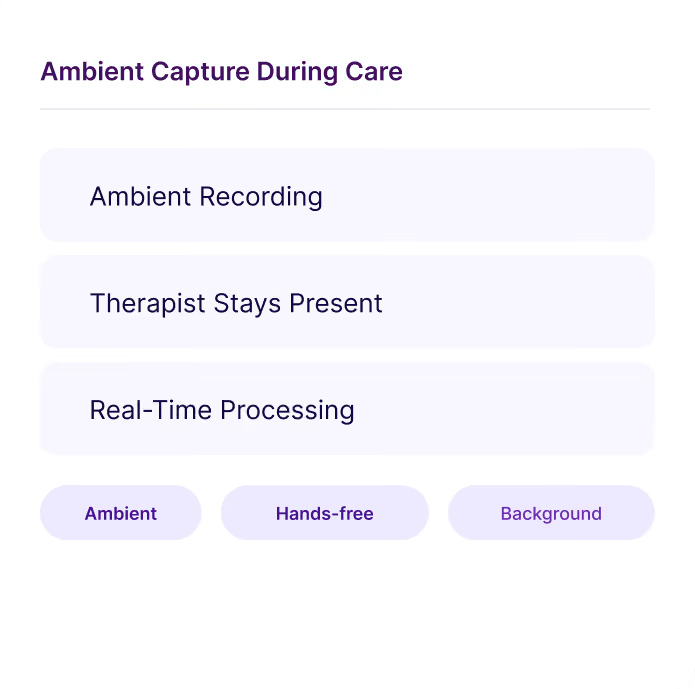
SPRY Agentic Scribe does more than record and summarize a visit. It works inside the EMR, uses the patient’s full context, drafts into SPRY fields, and helps therapists get to a note they can trust faster.
Not just dictation. An agent that thinks ahead.

How Orthopedic Physical Therapy Services
Made Documentation Easier Without Compromising Care
SPRY Agentic Scribe helped OPTS clinicians reduce time spent on notes, improve documentation quality, and stay more present during patient care.
How AI Documentation Changed Physical Therapy
“I actually enjoy doing them to some degree now, which is shocking to say. I don’t think anyone gets into physical therapy because we enjoy doing notes, but it is no longer the worst part of my day.”
JJ Lawley, PT, DPT Clinical Director, Orthopedic Physical Therapy Services

Documentation Built Around Rehab Workflows, Not Generic Transcripts
SPRY Agentic Scribe supports the clinical details, measurements, goals, and treatment context that matter across outpatient rehab specialties
Pain 3/10 at rest, 6/10 with overhead reach. Sleep tolerance improving.
Shoulder flexion 110°, abduction 95°, ER 30°. Strength remains limited with overhead movement.
Progressing toward post-operative ROM goals. Functional elevation remains restricted.
Advance strengthening per protocol. Continue reaching tasks and home exercise program.
Reports improved confidence with running. Mild hesitation during cutting and landing drills.
Single-leg squat control improving. Hop symmetry remains reduced on the involved side
Strength and dynamic stability are progressing, with residual deficits during higher-demand tasks.
Advance agility, deceleration, and sport-specific return-to-play drills.
Difficulty with dressing and meal prep. Pain increases with wrist extension and sustained grip.
Wrist extension 25°, flexion 40°. Grip strength remains reduced on the involved side.
Limited ROM and grip strength continue to affect ADL independence.
Continue therapeutic exercise, fine motor work, and task-based retraining for daily activities.
Reports greater confidence walking at home. No falls since last visit.
Gait speed and transfer performance improving. Left foot clearance remains reduced during swing phase.
Functional mobility is improving, with ongoing weakness affecting gait efficiency.
Progress uneven-surface training, dual-task walking, and lower-extremity motor control work.
Continued urgency and stress leakage with coughing and exercise. Symptoms gradually improving.
Pelvic floor strength 3/5 with delayed deep core activation and reduced endurance.
Coordination and activation are improving, though weakness continues to affect symptom control.
Advance pelvic floor coordination, breathing mechanics, and graded return-to-exercise progression.
Neck stiffness reduced since last visit. Fewer headaches and better tolerance for desk work.
Cervical rotation and extension improving. Residual tenderness noted through upper trapezius and paraspinals.
Responding well to care with improving mobility and reduced symptom irritability.
Advance strengthening per protocol. Continue reaching tasks and home exercise program.
COMPLETED
Caregiver reports the child is pulling to stand more often at home but still avoids cruising along furniture.
Tolerated supported standing for 45 seconds. Required moderate facilitation for lateral weight shifting and sit-to-stand transitions.
Improving lower-extremity engagement and standing tolerance. Motor planning and confidence with lateral movement remain limited.
Continue play-based strengthening, supported cruising activities, caregiver education, and home practice routine.
COMPLETED
Parent reports increased use of single words at home, especially during meals and play routines.
Produced 12 spontaneous single-word utterances during structured play. Imitated two-word phrases with moderate verbal and visual cues.
Expressive vocabulary and imitation are improving. Continued support needed for phrase expansion and functional communication.
Continue play-based language intervention, parent coaching, and two-word phrase modeling for daily routines.
COMPLETED
Patient reports feeling steadier when rising from a chair but still avoids walking outside alone.
Sit-to-stand improved from 5 reps to 8 reps in 30 seconds. Requires supervision with obstacle negotiation.
Lower-extremity strength and transfer confidence are improving. Dynamic balance remains a safety concern.
Continue balance training, transfer practice, gait progression, and home safety education.
COMPLETED
Patient reports mild stiffness in the morning and improved tolerance with light daily tasks.
Digit flexion improving with mild edema noted. Grip strength remains limited compared to uninvolved side.
Progressing appropriately with ROM and functional use. Continued limitations with swelling control and grip strength.
Continue protected ROM, edema management, graded strengthening, and home exercise program per protocol.
COMPLETED
Patient reports dizziness has reduced with daily activity but symptoms still occur when turning quickly.
Gaze stabilization tolerated for 45 seconds with mild symptom increase. Balance testing shows increased sway on uneven surface.
Vestibular tolerance is improving. Dynamic balance and quick head movement remain symptom-provoking.
Continue gaze stabilization, habituation exercises, balance progression, and fall-prevention education.
Everything Needed to
Complete the Note,Built In
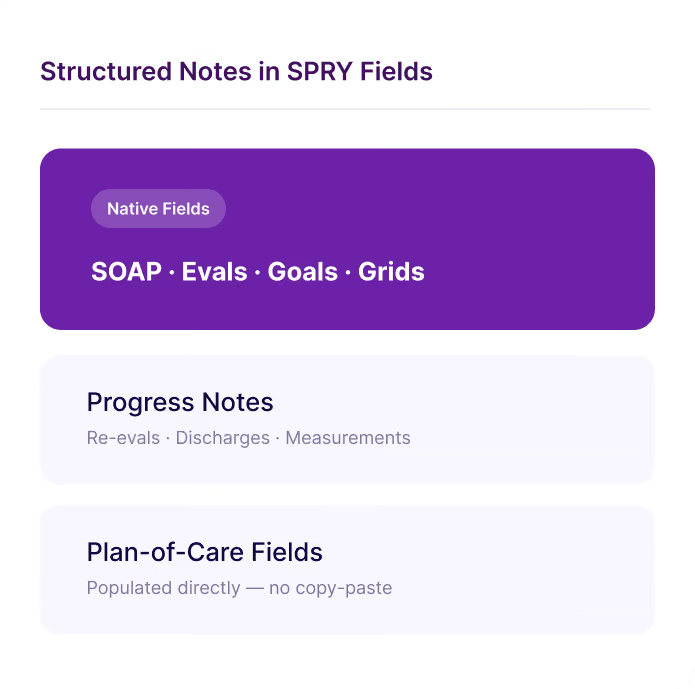
Rehab-Specific SOAP Drafts
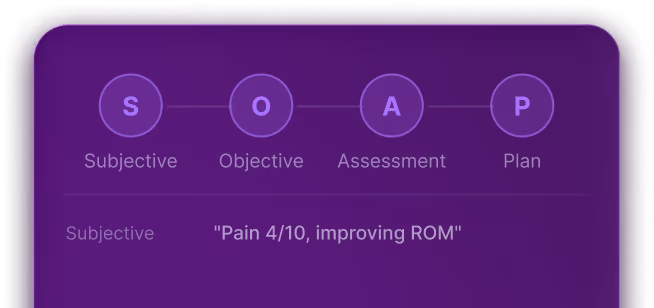
Generate structured notes shaped around subjective, objective, assessment, and plan sections for rehab therapy.
Patient Memory
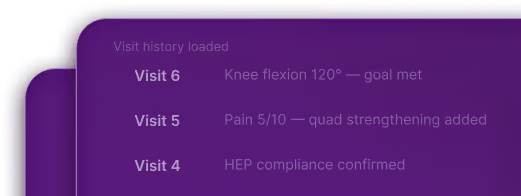
Bring forward prior notes, goals, visit history, plan of care, objective measures, and treatment context.
Clinician Preference Learning
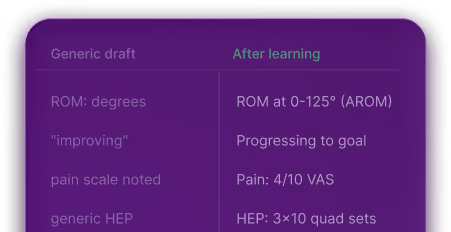
SPRY learns how each clinician documents and applies repeated preferences to future notes.
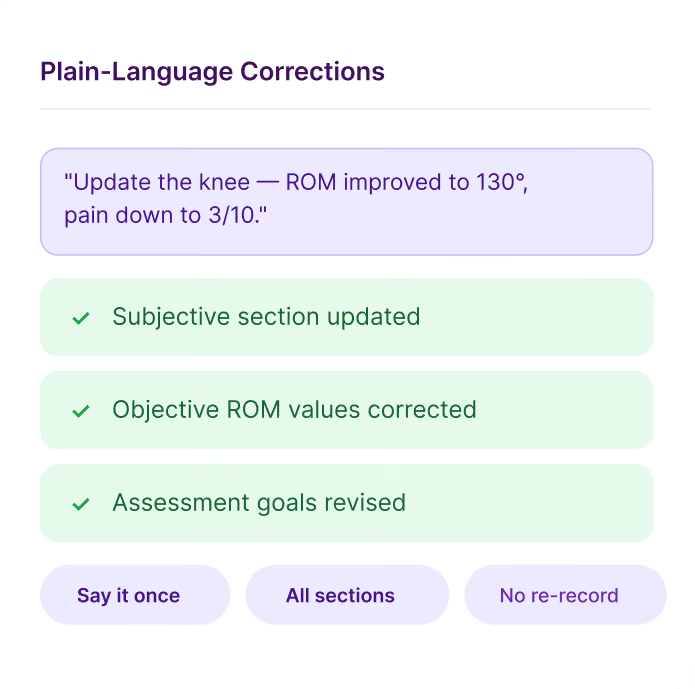
Plain-Language Corrections
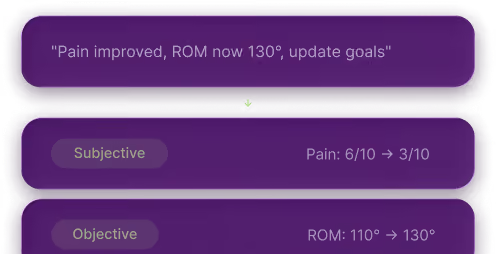
Therapists can speak corrections once and update related fields together.
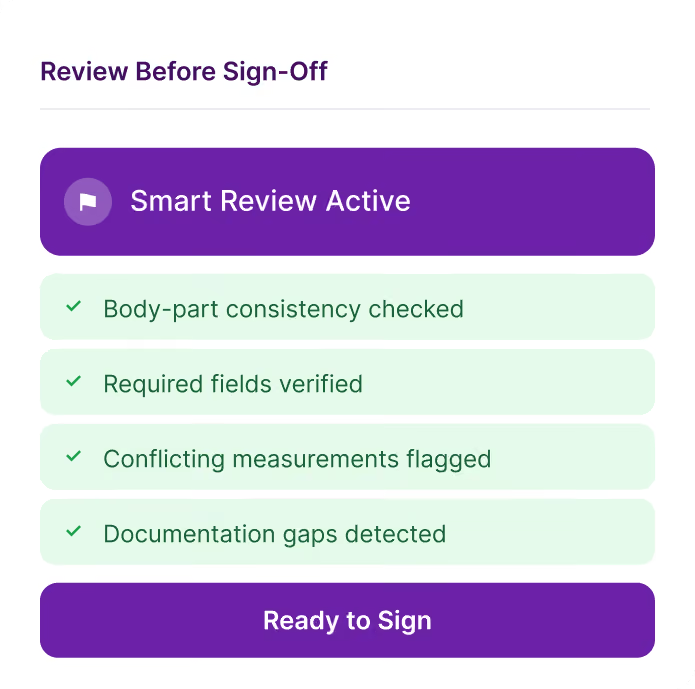
Review Flags
SPRY helps surface missing details, conflicting measurements, body-part mismatches, and documentation gaps before sign-off.
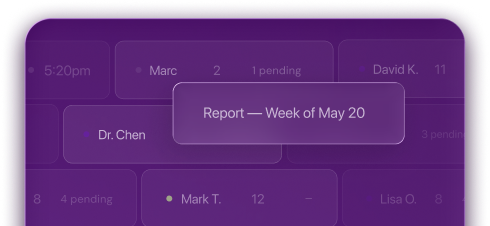
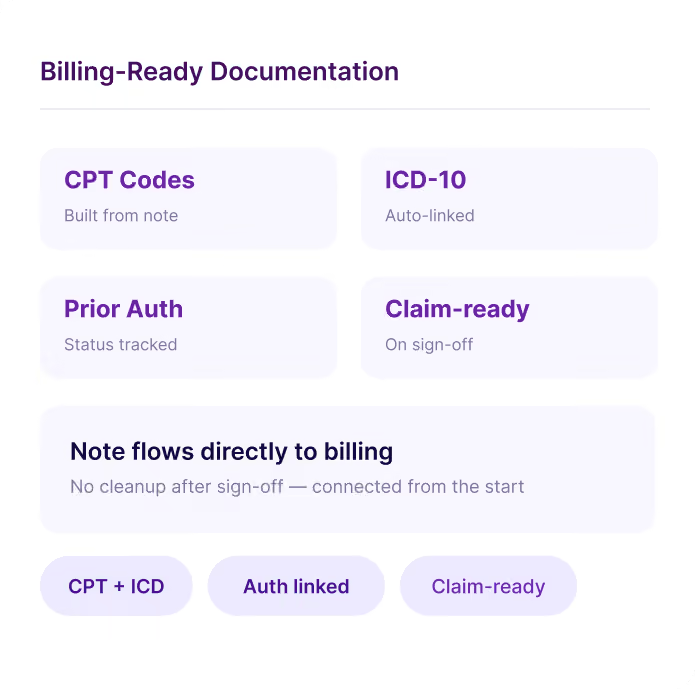
Billing Connection
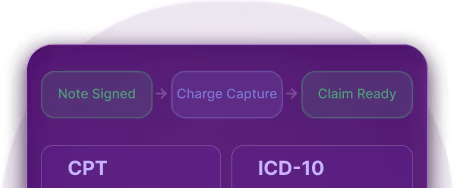
Signed documentation supports charge capture, prior authorization, coding, claim readiness, and billing workflows.
Documentation Time Goes Down.
Patient Time Goes Back Up.
How We Compare
Agentic


.png)



Hear How Therapists Stay Present, Finish Notes Faster, and Document With Confidence
Explore Related Features
Smart Waitlist
Move the right patient into the right opening as soon as capacity appears.
● NEWPrior Authorization
Check auth requirements and keep visits aligned with approved care.
Patient Communication
Send confirmations, reminders, and scheduling updates through connected communication channels.
Business Intelligence
Track utilization, completed visits, cancellations, and scheduling performance across locations.
Eligibility Verification
Confirm coverage before appointments are finalized.
Got questions? We’ve got answers.
Need more help? Reach out to us.