
This guide breaks down the real cost of reworking a denied healthcare claim, MGMA puts the average at $25.20, HFMA's broader range runs $25 to $118, driven almost entirely by staff labor investigating, documenting, and resubmitting. A worked example shows a 300-claim-a-month practice at a 12% denial rate facing roughly $900 in monthly rework costs. The more damaging figure is abandonment: between 35% and 65% of denied claims are never reworked at all, representing permanent revenue loss rather than delay, despite Premier's 2024 data showing 54.3% of appealed private-payer denials are eventually overturned and paid. A five-stage workflow table shows how SPRY's RCM process prevents most denials before submission, benefit verification, authorization management, and automated claim scrubbing, while the remaining two stages handle the smaller share of claims that still need rework or appeal. SPRY's automated claim scrubbing, eligibility verification, and prior authorization workflows address the leading causes of denials before submission, contributing to a 2.0% denial rate across managed clinics compared to the 5-10% industry average.
What Does It Actually Cost to Fix One Denied Claim?
Between $25 and $118 in staff time, according to MGMA and HFMA benchmark data, almost entirely driven by labor: a biller investigating the denial reason, navigating a payer portal, gathering supporting documentation, and resubmitting the claim correctly. That cost applies whether the claim is for $80 or $800, which is exactly what makes a high denial rate so damaging for a smaller practice.
SPRY reports a 2.0% denial rate across managed clinics, well below the 5-10% industry average, specifically because catching eligibility, authorization, and coding issues before submission avoids the rework cost entirely rather than managing it after the fact.
The Real Math for a Growing Practice
The per-claim cost compounds fast once real volume is applied. A practice submitting 300 claims a month at a 12% denial rate, in line with Optum's 2023 hospital denial data, can expect around 36 denials monthly. At MGMA's average rework cost of $25.20 per claim, that's roughly $900 a month in rework labor, before a single appeal has actually been won or lost.
The gap between the low and high end of that range matters. HFMA's benchmark for a claim actually appealed and fought, not just corrected and resubmitted, runs closer to $118, since a formal appeal requires clinical documentation, a written explanation, and follow-up on top of the basic resubmission work.
The Number That Turns a Denial Problem Into Permanent Revenue Loss
The rework cost isn't even the most damaging part of the math. Between 35% and 65% of denied claims, depending on the source, are never reworked at all. The care was delivered. The claim was denied. The bill is simply never resubmitted, and that revenue doesn't come back.
That abandonment rate is what makes prevention worth so much more than the rework cost alone suggests. A denial that's prevented before submission avoids not just the $25 to $118 rework cost, but the real possibility that the claim is written off entirely rather than fought.
How SPRY's Workflow Prevents a Denial Before It Ever Happens
Reworking a denial is fixing a problem after the fact. SPRY's RCM workflow is built around catching the same issues before a claim is ever submitted, since prevention avoids the $25 to $118 rework cost entirely rather than managing it after the fact.
The first three stages are where most of the rework cost gets avoided entirely, since a claim that's clean when it's submitted never generates the $25 to $118 cost this article opened with. The last two stages exist specifically for the smaller number of claims that still need attention, so nothing sits abandoned in a queue the way 35% to 65% of denied claims do industry-wide.
At CAM Physical Therapy, a 6-location practice, this shift from reactive rework to proactive prevention was described directly by the team managing it:
"Before SPRY, one person handled benefits and authorization for all six locations and did not have time to verify every single visit. Now with SPRY, we get daily verification. Every morning when we come in, we already know the benefits for every single one of our patients. That helps us stop visits before they become rejections."— Janesa Paver, VP of Finance, CAM Physical Therapy
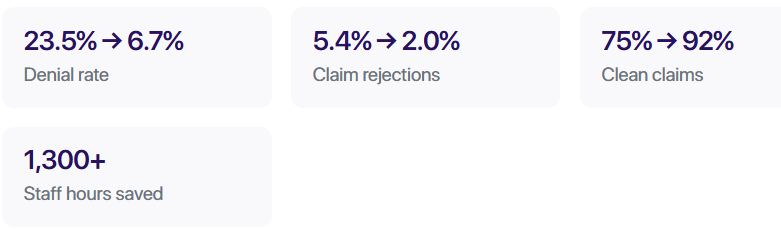
That's the practical difference this math translates into: every visit verified daily means fewer claims ever reach the point of needing the $25 to $118 rework cost in the first place, rather than a billing team working through a growing queue of denials after the fact.
Where Denials Actually Come From
Reworking a denial addresses the symptom. Understanding where it originated is what actually reduces the next one. Denials cluster around a specific set of causes: eligibility errors, diagnosis and procedure code mismatches, missing documentation proving medical necessity, and prior authorization failures.
SPRY's automated claim scrubbing applies over 2,400 payer rules to every claim before submission, catching the exact issues that produce most denials, PT-specific coding conflicts included, before a claim ever reaches a payer. SPRY's eligibility verification and prior authorization workflows address the two other largest denial sources directly, since roughly a quarter of initial denials trace back to eligibility and registration errors alone.
Is It Worth Appealing a Denial, or Just Writing It Off?
The data suggests appealing is usually worth it when a practice has the capacity to do it correctly. Premier's 2024 survey found 54.3% of private-payer denials that were actually appealed were eventually overturned and paid. That's a genuine coin-flip-or-better outcome for the claims practices do pursue, which makes the 35-65% abandonment rate even harder to justify from a pure revenue standpoint, since more than half the abandoned claims likely represented real, recoverable revenue.
The practical constraint is almost always capacity, not whether appealing is worthwhile. A practice without dedicated denial management staff often defaults to abandoning lower-dollar claims simply because the labor cost of fighting them competes directly with every other task on a billing team's plate.
What Prevention Actually Saves, Not Just What Rework Costs
The American Medical Association estimates that preventing 15 denials a month saves a practice roughly $4,500 a year in rework costs alone, before counting the revenue that would otherwise have been abandoned entirely. For a practice running SPRY's 2.0% denial rate instead of the 5-10% industry average, that gap compounds directly into both categories: fewer claims needing rework, and fewer claims at risk of being written off completely.
Frequently Asked Questions
How much does it cost to rework a single denied claim?
MGMA puts the average at $25.20, while HFMA's broader range runs $25 to $118 depending on complexity, with claims that require a formal appeal landing closer to the higher end.
What percentage of denied claims are never reworked?
Between 35% and 65% of denied claims are never resubmitted, according to industry data, meaning that revenue is permanently lost rather than delayed.
Is it worth appealing a denied claim, or is it faster to write it off?
Premier's 2024 survey found 54.3% of appealed private-payer denials were eventually overturned and paid, suggesting appealing is usually worth the effort when a practice has the staff capacity to do it properly.
How long does it take to rework one denied claim?
Industry estimates put the average at around 71 minutes of staff time per claim, covering investigation, documentation gathering, and resubmission.
What's the difference between a denial and a rejection?
A rejection is caught before a claim enters the payer's system, typically by billing software or a clearinghouse, and usually requires a simple correction. A denial has already been processed and formally refused by the payer, requiring a full appeal to reverse.
Ready to Spend Less Time Reworking Claims That Shouldn't Have Been Denied?
If your billing team is spending real hours every month reworking denials that trace back to eligibility, authorization, or coding issues, SPRY's team can walk through what prevention would look like at your actual claim volume.
Reduce costs and improve your reimbursement rate with a modern, all-in-one clinic management software.
Get a DemoLegal Disclosure:- Comparative information presented reflects our records as of Nov 2025. Product features, pricing, and availability for both our products and competitors' offerings may change over time. Statements about competitors are based on publicly available information, market research, and customer feedback; supporting documentation and sources are available upon request. Performance metrics and customer outcomes represent reported experiences that may vary based on facility configuration, existing workflows, staff adoption, and payer mix. We recommend conducting your own due diligence and verifying current features, pricing, and capabilities directly with each vendor when making software evaluation decisions. This content is for informational purposes only and does not constitute legal, financial, or business advice.